
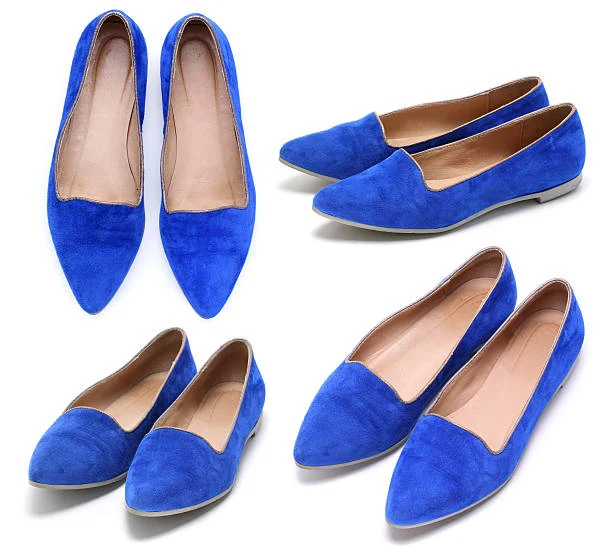
YYou know that moment when you touch a quality suede shoe and you just want to hold it a little longer? That velvety texture, soft, warm… it’s something else. Here at the workshop, every time I work with suede leather, I stop for a few seconds to feel it under my fingers. After 8 years in this trade, that fascination hasn’t faded.
But let me tell you a secret I learned the hard way (literally): suede shoes aren’t for everyone. And that’s okay. If you want shoes you can throw in the closet without a care, wear in the rain, never think about – suede isn’t your choice. But if you’re the type who appreciates beautiful things and is willing to give them proper attention… then stick around because I’ll tell you everything you need to know.
In the next few minutes, I’ll explain everything I’ve learned about suede leather – the real advantages (not the catalog ones), the disadvantages stores won’t tell you about, how to care for it so it lasts years, and when to wear it to look impeccable. No fluff, just workshop experience and feedback from hundreds of customers who bought suede shoes from us.
About the Author
Deprobat.ro is our Romanian workshop where we’ve been handcrafting natural leather footwear since 2016. We’re not self-proclaimed internet experts – we’re craftsmen who work with leather every single day. Everything I write here comes from real experience, not books.
Table of Contents
- What is suede leather exactly?
- Why it’s worth investing in suede shoes
- The ugly part (stores won’t tell you)
- Suede vs nubuck – differences that matter
- When to wear and when to avoid suede
- How to clean them properly (our workshop method)
- Water protection – what actually works
- How to keep them for years
- What to remember from this whole article
What is suede leather exactly?
Let me explain simply, without complicated technical terms. Take a piece of normal cowhide. It has two parts: the outer part (the grain) which is shiny and smooth, and the inner part (the flesh) which is softer and more fibrous. With classic leather we use the outer part. With suede we use the inner part – that’s why it’s called “reversed” in Romanian.
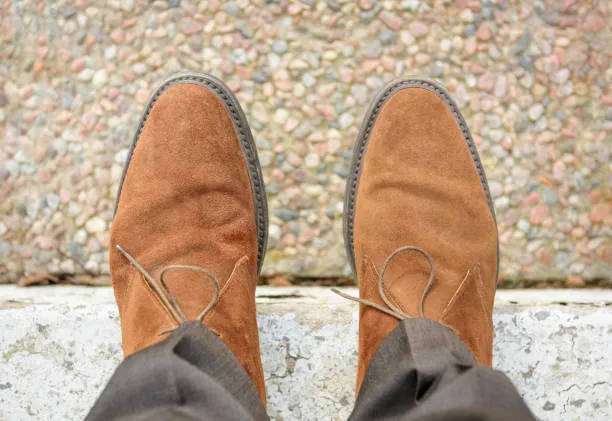
Now comes the interesting part: we take that inner part and sand it finely. The result? That velvety texture you feel when touching suede. The short fibers raised by sanding create that matte look, without shine, completely different from regular shiny leather.
How to recognize quality suede
Take the shoes in your hands. Run your fingers over the surface – you should feel a uniform, velvety texture, without rougher or smoother areas. If the texture is irregular, it means the sanding was done poorly or the leather was low quality to begin with.
The color should be uniform, without lighter or darker spots (except for intentional patina on premium models). Good suede absorbs pigment evenly.
And the most important test: bend the shoes slightly. Quality suede is flexible, bends naturally without cracking or making permanent creases. If it feels stiff, it’s probably cheap or poorly tanned suede.
My workshop experience: At Deprobat we only use premium quality bovine suede. We tried sheepskin at first – looks beautiful the first month, but wears out three times faster. After three customers complained, we switched exclusively to bovine. Costs more, but lasts 5-7 years instead of 1-2.
Why suede means elegance
I read somewhere that in the ’50s-’60s, suede shoes were only worn by actors and top businessmen. Frank Sinatra, Cary Grant – they all had entire collections. It wasn’t about money (though suede was expensive), it was about the message: “I have time and attention for details. I know how to appreciate beautiful things.”
Today? Same message. When you see someone with well-maintained suede shoes, you know they’re not the type who buys discount shoes and wears them until they break. They’re someone who invests in quality and knows how to preserve it.
Why it’s worth investing in suede shoes
Let’s talk about the good part. Because yes, there are solid reasons why suede costs more and why people keep buying it.
1. That immediate comfort – no break-in period
You know how with classic leather shoes you have to wear them 2-3 weeks until they mold to your foot? And until then they give you blisters and your heel hurts? With suede that doesn’t exist. You put them on for the first time and they’re already comfortable.
I had a customer who bought suede loafers on Friday and Sunday he wore them all day to a christening. Monday he called me: “Man, they didn’t hurt at all. How?” Simple – suede is soft from day one, bends naturally, doesn’t resist.
For me that’s the biggest advantage. If you stand a lot or walk a lot, that immediate comfort makes the difference between a good day and one where you want to take off your shoes and walk barefoot.
2. Feet breathe (important in summer)
That velvety texture isn’t just for looks – it creates micro-spaces that let air circulate. Result? Feet sweat less, don’t get as hot in summer, don’t smell bad at day’s end.
Compare with patent leather or synthetic shoes – after 4 hours you feel like your feet are in a sauna. With suede you can wear the shoes 10 hours and feet stay relatively dry and comfortable.
3. Looks different from everyone else
Let’s be honest – 90% of men wear shiny black shoes. Nothing wrong with that, but it gets boring. Suede shoes add texture, depth, visual interest.
Works with suits (if it’s business casual), works perfectly with jeans, even works with chinos or this summer with linen pants. That versatility – not too formal, not too casual – is rare.
At the workshop we have a joke: “Suede is like a good suit – makes you look better without seeming like you tried too hard.”
4. The more you wear them, the better they look
This is counter-intuitive, but it’s true. Well-maintained suede shoes with patina – the slightly darker areas where they’re used more, that slightly different texture in certain zones – look better than when they’re brand new.
I have a customer who’s been wearing the same brown loafers for 4 years. Every year they look better. It’s not wear – it’s patina. It’s story. It’s authenticity. When you meet him, the first question isn’t “What model are they?”, it’s “Where’d you get them and how long have you had them?”
| Advantage | What it means in practice |
|---|---|
| Immediate comfort | Put them on and walk all day without pain. Zero break-in period. |
| Breathability | Feet sweat less, no bad smell even after 10 hours. |
| Unique look | Stand out without seeming like you’re trying too hard. Natural elegance. |
| Noble patina | The more you wear them, the more authentic and valuable they look. |
Customer opinion – James M., London: “I bought suede shoes from Deprobat 2 years ago, skeptical. ‘It’ll be complicated to care for them,’ I thought. But the comfort… man, I forgot what it’s like to have sore feet at end of day. And yes, I clean them regularly with the brush, but it takes 5 minutes. Worth every second.”
The ugly part (stores won’t tell you)
Now let’s talk about the elephant in the room. Because if I only tell you good things, you’ll think I’m trying to sell you something. And I want you to know exactly what you’re getting into before investing.
1. Water is enemy number one
Let me tell you a story. Two years ago, a guy bought beige suede loafers. Beautiful, premium quality, solid price. After a week he called me angry: “Man, they’re ruined! I got caught in the rain for 10 minutes and now they’re full of dark spots!”
I told him: “I explained when you bought them that you need to protect them with waterproof spray.” Him: “I thought it was optional.” It’s not optional. It’s mandatory.
Suede absorbs water instantly. And it doesn’t just get wet – visible spots remain even after it dries. Fibers stick together, texture changes, look is ruined. You can partially save the situation (I’ll explain how below), but it’s much simpler to avoid rain from the start.
2. Any stain is a drama
Coffee, wine, grease, mud – any substance that touches suede penetrates instantly into fibers. With classic leather you wipe with a cloth and done. With suede? You need special brush, special eraser, holy patience, and sometimes even then it doesn’t completely disappear.
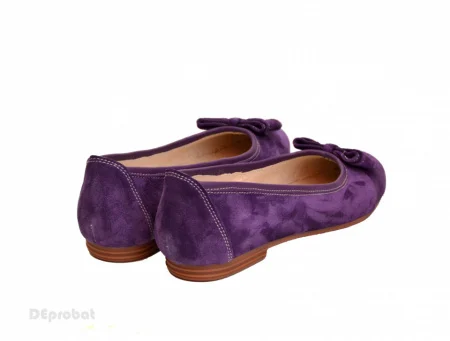
I have a friend who spilled red wine on his navy blue loafers. He tried everything he found on the internet. The stain is still there. More diluted, but visible. Now he only wears them at night when he knows lighting is dim. Don’t be like my friend – be careful where you go with suede.
3. Wears faster in friction areas
Soft fibers wear faster than the dense surface of classic leather. After a few months of intensive wear, areas where shoes rub (heels, sides, toes) start to become shiny and lose velvety texture.
It’s not the end of the world – you can partially restore texture with a special brush. But it’ll never be like new. It’s like hair – once damaged, it doesn’t magically regenerate. You can care for it, but can’t bring it back exactly as it was.
4. Maintenance takes time (and special products)
When customers ask me “How long does it take to care for suede shoes?”, I tell them the truth: 10-15 minutes every 3-4 wears. Seems little, but it’s 3 times more than classic leather.
Plus you need a mini-arsenal: soft brush, brass brush, special eraser, waterproof spray. Total cost? About $25-30. If you’re not willing to invest the time and money, honestly, buy classic leather. You’ll be happier.
5. Not for all weather
Snow, rain, road salt – all destroy suede. Wet Romanian winter? Forget suede. Rainy autumn? Same. They’re fundamentally dry weather shoes – spring, summer, sunny autumn.
This means a suede pair gets worn maximum 6-7 months a year. Compare with classic leather you wear all year. You have to accept you’re investing in a seasonal product, not a universal one.
| Disadvantage | Real impact (honest truth) |
|---|---|
| Vulnerable to water | 10 minutes in rain = permanent stains if not protected. Not exaggerating. |
| Instant stains | Any substance leaves a mark. Coffee, wine, grease = guaranteed headache. |
| Visible wear | After 6 months intensive wear, friction areas become shiny. Normal, but visible. |
| Constant maintenance | 10-15 min every 3-4 wears. If you’re lazy, suede isn’t for you. |
| Not for winter | 6-7 months a year maximum. Cost per wear is higher than classic leather. |
My honest advice: If you read this list of disadvantages and think “Pfff, too much effort”, perfect – buy classic leather and you’ll be happy. But if you think “Ok, I can do this for a beautiful shoe”, then suede is for you. There’s no wrong answer, just clarity about expectations.
Suede vs nubuck – differences that matter
Many confuse suede with nubuck. They look similar, feel similar, but are different materials. And that difference matters when you’re spending $100-150 on a pair of shoes.
What is nubuck?
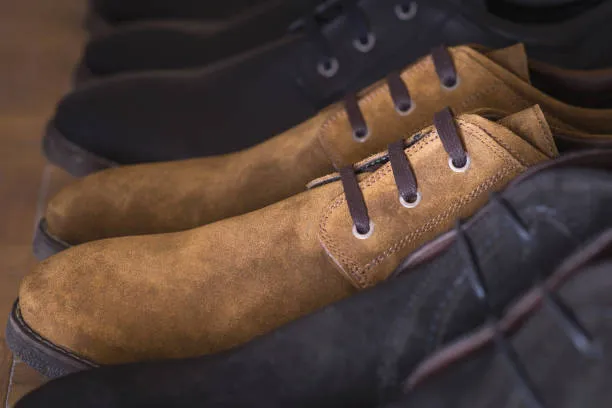
Simple: nubuck is classic leather (outer part, grain) sanded finely to have velvety texture. Suede is the inner part of leather, sanded. Visual result is similar, but properties are different.
What are the differences in real life?
Durability: Nubuck is more resistant because it comes from the denser outer layer. If you wear shoes daily and walk a lot, nubuck lasts longer. Simple.
Texture: Suede is more “hairy”, softer. Nubuck is finer, more “velvet”. To the touch, the difference is subtle but exists. Suede is more casual, nubuck is more refined.
Price: Nubuck costs more – 20-30% on average. Because it uses the valuable part of leather and manufacturing process is more delicate.
Maintenance: Similar for both. Both need brush, spray, attention. Nubuck is slightly less absorbent (so slightly easier to maintain), but difference is marginal.
Which one to choose?
Honestly? For most people, the difference doesn’t justify the price difference. If you find beautiful suede shoes at a good price, take them. If you find nubuck at same price, perfect.
Only situation when it’s worth paying extra for nubuck: if you know you’ll wear them a lot (4-5 days a week). Then the extra durability pays off over time.
At the workshop: We use both, depending on model. For casual loafers we prefer classic suede – it’s softer and more comfortable for extended wear. For boots we prefer nubuck – resists better to friction from ankles and heels. It’s not about “better” or “worse”, it’s about right for use.
When to wear and when to avoid suede
Here’s where suede shines and where it’s completely inappropriate. Experience accumulated from hundreds of customer feedback.
Where it works perfectly
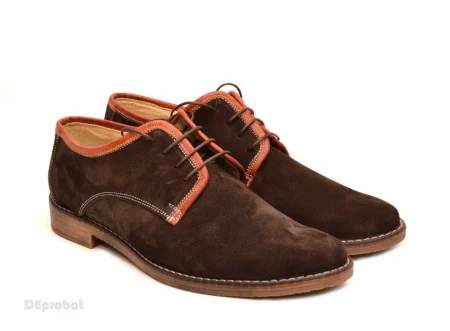
Business casual (dry weather): Office with relaxed dress code, informal client meetings, after-work social outings with colleagues. Brown or navy blue suede loafers = perfect balance between professional and approachable.
Elegant weekend: Brunch, shopping, park walk, going out with friends. Suede desert boots with jeans and shirt = the classic “I have style but I’m not trying too hard” look.
Summer in the city: When it’s hot, you want shoes that breathe. Suede is perfect – looks good, doesn’t make feet hot, works with shorts or chinos.
Semi-formal events: Summer weddings with cocktail dress code, christenings, elegant but not ultra-formal private parties. Navy or burgundy suede shoes with a more relaxed suit = you have style without seeming rigid.
Where not to even think about it
Black tie / Ultra-formal: Tuxedo, gala, wedding with strict dress code. For these there are only black patent Oxford shoes. Period. Suede, however expensive, is too casual.
Romanian winter: Snow + salt + mud = guaranteed death for suede. Even if you protect them with spray, one winter in Bucharest or Cluj destroys them. Keep them for spring.
Intensive outdoor activities: Hiking, camping, fishing, anything involving contact with nature. Suede is for asphalt and pavement, not for forest and mud.
Environments with stain risk: Restaurant (if you work there), mechanic workshop, anywhere greases and liquids fly. One drop of oil = permanent stain.
What color to choose for maximum versatility
Medium brown/tan: Safest choice. Goes with jeans (any shade), grey, beige, navy blue pants, even greens. First suede pair? Get brown.
Navy blue: Second most versatile. Perfect with beige, light grey, white pants (summer). Less versatile than brown but adds more personality.
Grey: For those with urban minimalist style. Works perfectly with black, white, grey (monochrome look). But limits color combinations.
Burgundy/oxblood: Only if you already have brown and navy and want to experiment. Looks spectacular, but requires confidence to wear.
My experience: 70% of customers choose brown. 20% navy blue. 10% other colors. And it’s logical – brown is versatile, elegant, works with everything. You don’t have to be original with first pair, you have to be practical.
How to clean them properly (our workshop method)
Here’s the method we use and teach every customer who buys from us. It’s not rocket science, but it has its steps.
Basic cleaning (after 3-4 wears)
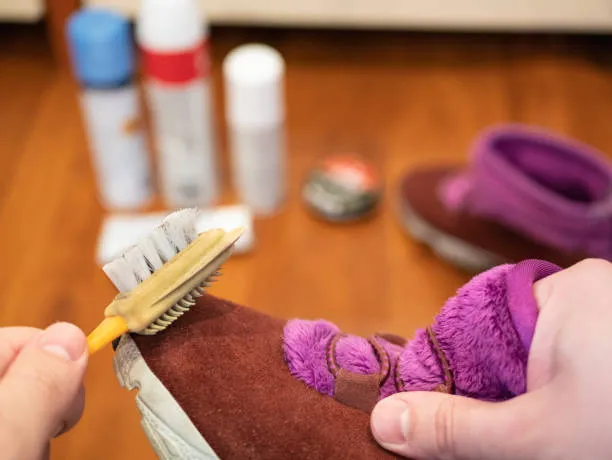
Step 1: Soft brush (rubber bristle one), movements in fiber direction. Remove surface dust. 2 minutes maximum for both shoes.
Step 2: Now brush against fibers. Short, quick movements. This raises fibers that laid down and restores velvety texture. Focus on areas that seem smoother.
Step 3: Again in fiber direction to even out. Done, looks like new.
Whole operation: 5 minutes. Three times faster than polishing classic leather shoes.
Intensive cleaning (monthly or when dirt is visible)
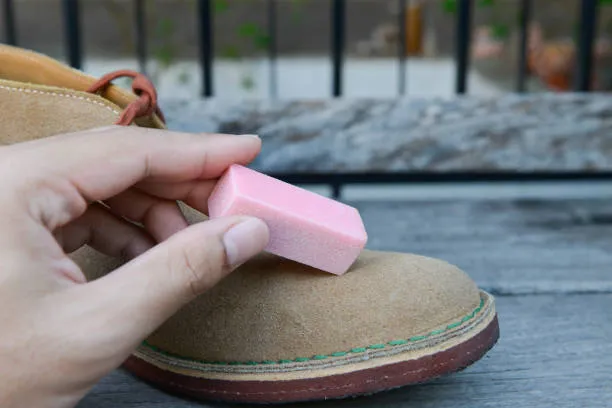
Tools: Brass brush, special suede eraser.
Step 1: Brass brush on dirty areas. Energetic circular movements. This brush penetrates fibers and pulls out deep dirt. Careful – don’t use on already worn areas, you’ll make them worse.
Step 2: For specific stains (dried mud, something undefined), rub with eraser. Just like a pencil eraser – absorbs dirt through friction. Linear movements, not circular.
Step 3: Soft brush for finishing, remove residues, even out texture.
IMPORTANT: Never water! Cleaning is always dry. Water stains suede worse than the dirt you’re trying to remove.
Nasty stains (the ones that drive you crazy)
Grease/oil: Cover immediately with talc or cornstarch. Leave 24 hours to absorb. Then brass brush. Stain will reduce, but probably won’t disappear completely. Sorry, but that’s reality.
Water stains (after drying): Contradictory trick but it works: dampen entire shoe surface with well-wrung cloth (damp, not wet!). Let dry evenly. Then brush. Idea is to even out stain with rest of shoe.
Dried mud: Let it dry completely. Don’t try to wipe when wet – you push it deeper into fibers. After drying, energetic brass brush. Mud will crumble and fall.
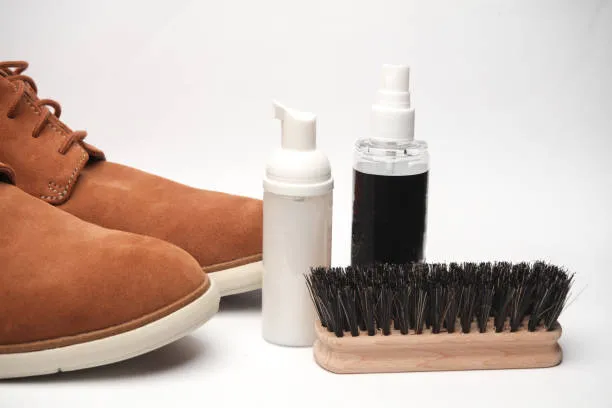
My recommended kit: Soft brush ($8), brass brush ($7), special eraser ($4), waterproof spray ($11). Total: ~$30. Serves your shoes 3-4 years minimum. Not expensive, it’s an investment that pays off.
Water protection – what actually works
If you remember one thing from this article, let it be this: waterproof spray before first wear. Not optional, mandatory.
How to waterproof correctly
When: Immediately after purchase, before wearing first time. Then every 3-4 weeks or after each deep cleaning.
What spray: One specific for suede and nubuck. Don’t get spray for classic leather – has different composition and can stain. Look for something with silicone or fluoropolymers in composition.
Correct process:
1. Clean shoes with brush – spray applies to clean surface.
2. Test on small, hidden area (inside collar). Wait 10 minutes, check if color doesn’t change.
3. Spray from 8-10 inches. Slow, steady movements. Cover entire surface evenly. Don’t concentrate spray in one spot – risks staining.
4. Apply 2-3 thin coats, with 15-20 minute breaks between them. Multiple thin coats > one thick coat that stains.
5. Leave 24 hours to dry before first wear. Ventilate room, sprays have strong smell.
Before leaving home
Check weather: Rain probability >30%? Change shoes. Not worth the risk for 10 minutes on street.
Where going: Unpaved parking lots, construction sites, outdoor events? Take another pair. Suede is for clean urban environments.
What activities: Driving a lot? Right heel wears faster from pedals. Walking a lot? Check if you put spray recently.
Proper storage when not wearing
Shoe trees: Invest $15-20 in a pair. Maintain shoe shape, absorb moisture, extend life by 2-3 years. I put trees in all shoes at end of day, without exception.
Location: Dry, airy place, away from heat sources (radiator). Not in closed box – leather needs to breathe. Ideal on open shelf or in closet with mesh door.
Breaks between wears: Don’t wear same shoes 5 days straight. Alternate with another pair. Let leather rest, dry completely, recover shape. Minimum one day break between wears.
How to keep them for years (practical tips)
I want to tell you about a customer who bought suede shoes 6 years ago. Still wears them. Look good. How? Because he did a few things right from the start.
Between seasons (autumn-winter)
When October comes and rain starts, suede shoes go on vacation until March-April. Here’s what you do:
Step 1: Complete cleaning with brushes. Remove all dirt accumulated during season.
Step 2: Fresh waterproof spray. Even if not wearing them 4-5 months, spray degrades over time.
Step 3: Trees in shoes. Mandatory. Without trees, leather deforms during storage.
Step 4: Breathable cloth bags (not plastic!). Plastic = condensation = mold. At Deprobat we give free cloth bags with each pair exactly for this.
Step 5: Dry place, constant temperature. Not attic (too hot in summer), not basement (too humid).
Day to day
After each wear: Remove trees (if you have), let shoes breathe 15-20 minutes (to evaporate perspiration), then put trees back. Don’t leave shoes to “rest” without trees – they deform.
Every 3-4 wears: Cleaning with brush (5 minutes, you read above how).
Every 3-4 weeks: Waterproof spray refresh. Protection degrades over time, even if you don’t see with naked eye.
When to go to professional
Signs you need help:
– Extended shiny areas, major texture loss
– Large grease/oil stains that didn’t come out with your methods
– Worn soles, deformed heel
– Stitching coming apart
A professional can partially restore texture with specialized equipment, can replace soles, can repair stitching. Costs $30-60 (depending on problem), but cheaper than new pair.
My golden rule: If shoes cost >$100 and have a problem I don’t know how to solve myself, I go to a craftsman in 24-48 hours. The longer you wait, the worse the problem gets and the more repair costs. Learned that the hard way (and from my wallet).
What you’ll find at Deprobat.ro
Men’s Suede Shoes
Our suede shoes are handcrafted in the workshop, from 100% natural bovine leather. We don’t buy them ready-made from China to put our label on – we manufacture them ourselves, made-to-order, for each customer.
Anatomical insole made of leather (not cardboard covered in leather), flexible sole made of natural rubber, hand-stitched finishes. Durability: 5-7 years with proper care. Not 1-2 years like store shoes.
What you get: Shoes made for your foot, cloth bag for storage, detailed care instructions, support from us whenever you need.
What to remember from this whole article
- Comfort is real – not marketing. Suede is soft from day one, no break-in period. If you stand a lot, difference is huge.
- Water is the enemy – waterproof spray before first wear, not after they stain. Prevention is cheaper than repair.
- Maintenance takes time – 10-15 minutes every 3-4 wears. If you’re not willing to invest that time, buy classic leather.
- Not for all weather – spring, summer, dry autumn. Winter and rainy autumn forget about them. Cost per wear is higher than classic leather.
- Patina is beautiful – well-maintained shoes look better after 2-3 years than when new. It’s normal, not defect.
- Color matters – brown for maximum versatility, navy blue for personality, burgundy for courage. First pair? Get brown.
- Care kit mandatory – soft brush, brass brush, eraser, spray. ~$30 investment that pays off over years.
- Quality makes difference – premium bovine leather lasts 5-7 years. Cheap or sheep leather lasts 1-2 years. Calculate cost per wear, not just initial price.
Ready to invest in shoes worth your attention?
Discover Deprobat.ro’s natural leather footwear collection →
If you made it here, means you’re the type who appreciates quality and is willing to invest in it. At the workshop we’re here to help you find the perfect pair. Each shoe is handcrafted, with attention to detail, because we know you’ll wear it for years.